



NEWS

Communication Theology Series Explores Faith as God’s Self-Communication
Conceived and guided by Salesian Father Peter Gonsalves, the Communication Theology series presents theology as God’s self-communication in history and humanity’s response through faith, symbol, culture, and community. It rereads major Catholic thinkers through communication, culture, and media. It has so far produced two volumes published by Christian World Imprints, New Delhi: The Communication Theology of Karl Rahner by Charles Ndhlovu and Peter Gonsalves, and The Communication Theology of Avery Dulles by Divine Word Father John Paul Herman. Together, the books seek to provide theological foundations for evangelization, pastoral ministry, digital engagement, and ecclesial leadership in an increasingly interconnected world.
The Communication Theology of Karl Rahner: Theology as Divine Dialogue
Released in February 2026, The Communication Theology of Karl Rahner presents the German Jesuit theologian’s thought as a dialogue between faith and communication. Written by Charles Ndhlovu and Salesian Father Peter Gonsalves, the 216-page volume argues that communication is central to theology because revelation itself is God's self-communication. This framing leads directly to Rahner’s transcendental theology.
The book draws on Rahner’s transcendental theology, which views every human person as open to God’s mystery. Christ is presented as the “Real Symbol” of God—the definitive expression of divine self-giving in history. Building on this foundation, the authors contend that theology is communicative because God reveals Himself through dialogue, relationship, and response.
A distinctive contribution of the volume is its interdisciplinary engagement with communication theory. Rahner’s theological insights are placed in conversation with the ideas of Harold Lasswell, Marshall McLuhan, James Carey, and F.X. Dance, demonstrating how classical theology can illuminate questions about media, culture, and meaning.
The book also broadens Christian mission beyond preaching and catechesis to art, music, media, dialogue, social development, peacebuilding, and the witness of everyday life. From this wider view, it traces Communication Theology through three related strands identified by Divine Word Father Franz-Josef Eilers: Theology of Communication, Communicative Theology, and Communication Theology proper. While the first views media as tools for evangelisation and the second emphasizes intelligible communication of faith, the third understands communication as intrinsic to theology because God is a communicating God.
With a preface by Jesuit Father Bryan Lobo and an endorsement by Jesuit Father Paul Soukup, the volume offers theologians, communication scholars, and pastoral practitioners a systematic framework for engaging faith in the digital age while reaffirming Rahner’s relevance to contemporary theological reflection.
The Communication Theology of Avery Dulles: Models of Communication for the Church
The second volume, The Communication Theology of Avery Dulles, was launched at the Catholic Bishops' Conference of India (CBCI) headquarters in New Delhi on 11 July 2026. Authored by Divine Word Father John Paul Herman and the series editor, Fr Peter Gonsalves, the book extends the series by exploring how communication shapes the Church's identity and mission through the ecclesiological vision of Cardinal Avery Dulles. It shifts the focus from ontology to ecclesiology.
The volume was released by Bishop Rayarala Vijaya Kumar, Chairman of CBCI and NISCORT, who presented the first copy to Dr Natasha Govekar, Director of the Theological Pastoral Department of the Vatican Dicastery for Communication. The event, coordinated by CBCI Secretary General Father Mathew Koyickal, was attended by Church leaders, theologians, media professionals, priests, religious, and communication practitioners.
Drawing inspiration from Dulles' influential work, Models of the Church, Father Herman proposes six complementary models of communication: the Institutional, Herald, Sacramental, Mystical Communion, Servant, and Community of Disciples. Each represents a distinct theological mode through which the Church proclaims the Gospel, celebrates faith, serves humanity, and builds communion. Together, these models support his argument.
Father Herman argues that communication is not simply an activity undertaken by the Church but is intrinsic to its very nature. Every ecclesial model expresses God's saving presence in a particular way, making communication a constitutive dimension of ecclesiology rather than merely a pastoral strategy.
The book also addresses the Church's ongoing journey toward synodality and the emergence of a networked Church, offering theological insights for evangelization, pastoral leadership, and digital engagement. By integrating communication studies with ecclesiology, the volume provides fresh perspectives for scholars, seminarians, religious, and pastoral leaders seeking to proclaim the Gospel through dialogue, participation, and authentic witness.
Together, the first two volumes establish the Communication Theology series as an important scholarly contribution. They show theology as fundamentally communicative, beginning with God's self-revelation and continuing through the Church's mission of dialogue with the world.



News Published by
As part of the Colle project, we offer an international volunteering experience with young people from all over the world, who live in community and share their lives, …
DOWNLOAD PDF for more information.
Common Spiritual Direction Series
✥ CSDS ✤ Download Your Kit Free
Join the Conversation
Your experience matters. Whether you’re a youth leader, educator, or simply passionate about making a difference—your insights add value that reporting alone can't capture. When you comment, you're not just reacting—you're helping shape a thoughtful, encouraging community.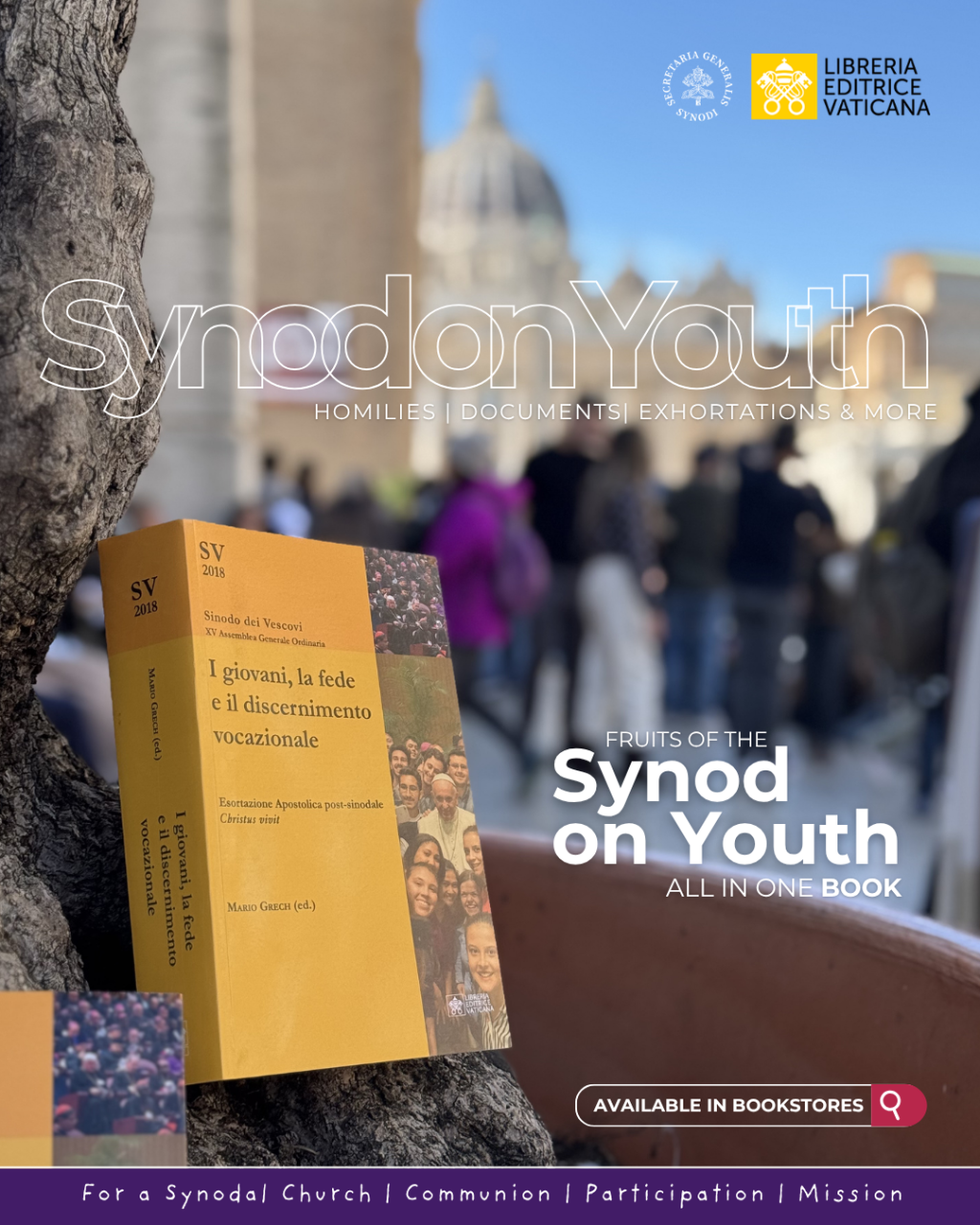 Publisher: Libreria Editrice Vaticana
Year of publication: 2026
Available from: 4 March 2026
Pages: 928 pp., Paperback
Publisher: Libreria Editrice Vaticana
Year of publication: 2026
Available from: 4 March 2026
Pages: 928 pp., Paperback


NEWS TRACKER: RELATED NEWS ON THIS CLASSIFICATION


