


NEWS

Rediscovering Don Bosco Through the Eyes of a Teacher Trainee
Vanessa Rasquina is a passionate and inquisitive educator with a Master's degree in Organic Chemistry and is currently pursuing a Bachelor of Education (B.Ed.) at St. Xavier's Institute of Education, Mumbai. She is deeply committed to making learning meaningful by simplifying complex concepts and connecting classroom lessons to real-world experiences through engaging, student-centred approaches that foster curiosity, confidence, and conceptual understanding. An avid reader and enthusiastic traveller, Vanessa draws constant inspiration from her experiences and her love for lifelong learning. The article that introduced the Sundays in Valdocco initiative sparked her interest and inspired her to write this article, reflecting her passion for meaningful education and the Salesian spirit of accompanying young people in their journey of growth.
What can a 19th-century priest teach a 21st-century classroom?
Much, much more than I ever imagined.
Like many people, I had always known about Don Bosco as a saint - a priest who welcomed poor and abandoned young people, founded the Salesians, and devoted his life to serving them.
But recently, I felt inspired to read more about his life after attending the 2nd edition of Sundays in Valdocco at Borivali.
And as I continued to read, I soon found myself asking a different question: What if we remembered Don Bosco not only as a saint, but as one of history's great teachers?
As a B.Ed. student, this question made me wonder.
Every week, we discuss and learn about so many topics: inclusive education, experiential learning, differentiated instruction, Universal Design for Learning, classroom management, etc. These ideas often feel and sound very modern.
Yet the more I explored Don Bosco's life, the more I realized that although he may never have heard of these terms, much of the good work he did resonates deeply with the values we promote in education today.
He didn't leave behind lesson plans. But he left behind stories.
And maybe... those stories still have something to teach us?
John Bosco's Dream at Nine (1824)
At the age of nine, John Bosco dreamt of boys shouting, fighting, and behaving like wild animals. When he tried to stop them, he was told they would be transformed not through violence, but through gentleness, patience, and love. The wild beasts slowly became gentle lambs—a dream that shaped his life's mission.
"The dream ended... But its lesson became Don Bosco's lifelong mission."
Every classroom has children whose behaviour speaks louder than their words.
Today we talk about restorative practices, classroom management, and positive behaviour support. Don Bosco reminds us that transformation begins not with punishment, but with trust, openness, caring and relationships. Great teachers look beyond behaviour to see potential.
The First Meeting with Bartolomeo Garelli (1841)
On 8 December 1841, a young orphan named Bartolomeo Garelli was chased away because he did not know how to serve Mass. Don Bosco stopped him, learnt his name, listened to his story, and invited him back.
That simple conversation became the beginning of Valdocco. (A place that feels like home....) And the Oratory - a place where many young people found friendship, education, faith, and hope.
Inclusion begins long before accommodations and lesson plans.
It begins when every learner feels seen, welcomed, and valued. Before asking "What can't this child do?", perhaps we should first ask, "Who is this child?"
Mamma Margaret arrives at the Oratory in Valdocco (1846)
As more boys arrived, Don Bosco invited his mother, Mamma Margaret, to help care for them. She cooked, mended clothes, comforted the homesick, cared for the sick, and treated every young person like they were her family.
Valdocco became more than just a place or a school. It became a home....
Students learn best where they feel emotionally safe.
Long before we spoke about belonging and student well-being, Valdocco showed that meaningful learning begins with care, trust, and genuine relationships.
See The Potential, Not Problems
When Michael Magone first arrived at Valdocco, many saw an unruly boy.
Don Bosco saw raw potential.
Instead of trying to discipline him, he guided & trusted him with responsibility and helped him discover what he was capable of doing.
Don Bosco saw the hidden potential in Michael and asked him to come to the Oratory
There are many students and youth who feel lost at times. Sometimes behaviour is simply potential looking for direction. The right mentor can change a student's life. And the opposite is equally true.
Through his life journey, Don Bosco shows us that our role as teachers is not merely to manage students, but to help them discover strengths they cannot see in themselves.
Education Is About Building Character, Not Just Marks
Don Bosco encouraged Dominic Savio to pursue holiness through everyday acts of kindness, responsibility, and joy. He believed education should shape character as much as intellect.
Academic success matters. Marks are important, but they are not everything.
Empathy, honesty, resilience, leadership, and compassion are the values that truly matter in life. Education should help students become not only knowledgeable, but good human beings.
The Playground Is Also a Classroom
Don Bosco believed learning did not stop when lessons ended.
He played games with the boys, organised music, theatre, outings, and conversations. (Much of what we do in Don Bosco Youth Services today!) Relationships formed on the playground became the foundation for learning in the classroom.
Some of the most meaningful learning happens outside formal lessons.
Play, teamwork during projects, field trips, storytelling, and shared experiences build trust, confidence, and community—qualities every classroom needs.
Teach for Life, Not Just for School
Don Bosco recognised that many young people needed more than education—they needed a future.
He established workshops where boys learnt printing, carpentry, tailoring, shoemaking, and other trades, giving them skills that led to meaningful work.
"Always act so that you will still be able to earn an honest living."
"You are in school to acquire knowledge so as to enable yourselves to earn a living in due time. Whatever your social standing, your vocation, or your future career may be, always act so that you will still be able to earn an honest living, even if you should lack family resources or an inheritance. Never let it be said of us that we live by the sweat of another's brow." -St. John Bosco, The Biographical Memoirs of Saint John Bosco
Today, that vision continues through Don Bosco Industrial Training Institutes (ITIs) and vocational centres across India, preparing thousands of young people with industry-relevant skills and pathways to employment.
Relationships Before Rules
Don Bosco's Preventive System rested on three pillars:
Reason. Religion. Loving-Kindness.
Rather than relying on fear or punishment, he believed teachers should remain present among young people—guiding, encouraging, listening, and building relationships that prevented problems before they arose.
Why Don Bosco Still Matters
As I dwelled on these stories as a teacher trainee, I saw myself making many connections.
Johann Heinrich Pestalozzi spoke about educating the Head, Heart, and Hands.
Gandhiji's Nai Talim focused on learning through productive work, community life, and character formation.
India's National Education Policy 2020 talks about holistic, competency-based, and experiential learning.
Don Bosco did not use this language, nor would it be accurate to claim he knew all this. Yet through his work, he nurtured the head through learning, the hands through practical skills, and the heart through compassion, belonging, faith, and responsibility.
Perhaps that is why his work feels relevant even today - not because it was ahead of its time, but because it recognised something timeless: Every young person deserves to be known, valued, and given the opportunity to flourish.
Final Thoughts
We often measure education through marks, lesson plans, and assessments.
But Valdocco reminds us that education begins much earlier - with a smile at the door, a welcoming classroom, a shared meal, a game on the playground, a conversation, and a teacher who knows children by name.
Knowledge fills the mind. But Belonging opens the heart to learn.
As I continue my journey as a future educator, I hope to build classrooms where students feel safe enough to ask questions, confident enough to make mistakes, and valued enough to believe that they matter.
Perhaps that is Don Bosco's greatest lesson. Not simply that every child deserves an education.
But that every child deserves someone who believes in them before they believe in themselves.
---------
Would you like to add your opinion click here
NOTE - All images are AI-generated



News Published by
As part of the Colle project, we offer an international volunteering experience with young people from all over the world, who live in community and share their lives, …
DOWNLOAD PDF for more information.
Common Spiritual Direction Series
✥ CSDS ✤ Download Your Kit Free
Join the Conversation
Your experience matters. Whether you’re a youth leader, educator, or simply passionate about making a difference—your insights add value that reporting alone can't capture. When you comment, you're not just reacting—you're helping shape a thoughtful, encouraging community.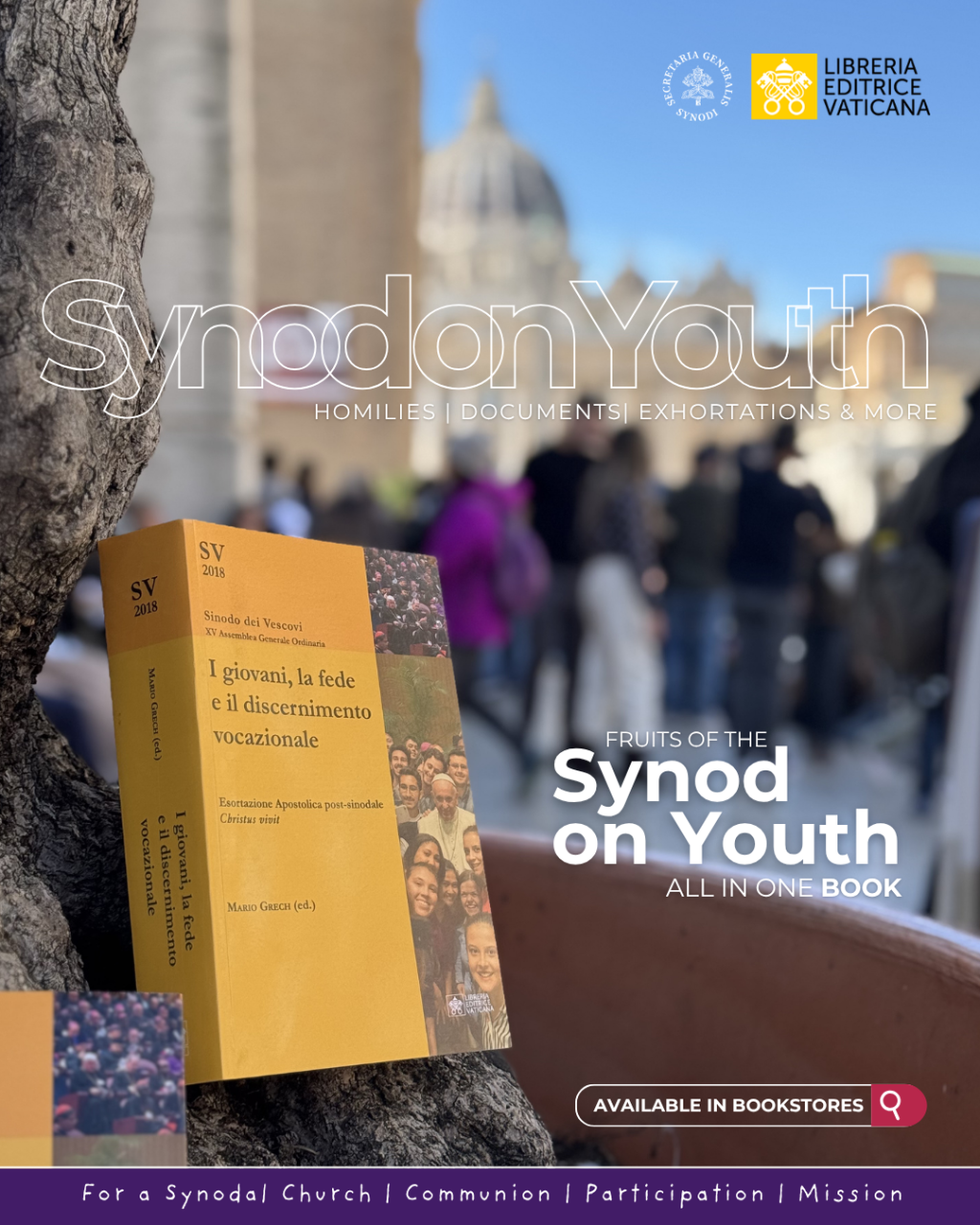 Publisher: Libreria Editrice Vaticana
Year of publication: 2026
Available from: 4 March 2026
Pages: 928 pp., Paperback
Publisher: Libreria Editrice Vaticana
Year of publication: 2026
Available from: 4 March 2026
Pages: 928 pp., Paperback


