


FLASH NEWS:
NEWS

International Dialogue Reaffirms Salesian Commitment to Accompany Migrants Worldwide
News reported by: Fr. Francis Bosco
On International Migrants Day, 18 December, Don Bosco for Migrants (DB4M), in collaboration with the Youth Ministry Department in Rome, organised an International Dialogue on Accompanying Migrants via the Zoom platform. The programme brought together around 80 participants from across continents, including Salesians, lay collaborators, youth ministry personnel, and social action practitioners, creating a global space for reflection, sharing, and renewed commitment to migrants and refugees.
The dialogue aimed to reflect collectively on contemporary realities of migration and to reaffirm the Salesian mission of accompaniment in diverse, often challenging contexts. Moderated by Fr. Deepu Mathew, Director of the Migrant Desk, Bangalore, the meeting set out to listen attentively to lived experiences and to envision coordinated global responses.
In his introductory remarks, Fr. Deepu recalled the significance of International Migrants Day and the Salesian call to stand with the most vulnerable. He noted that migration today is marked by pain and struggle, but also by hope and resilience. Emphasising that accompaniment is not merely a service but a journey of solidarity, he invited participants to see migrants not as passive beneficiaries but as protagonists of their own histories. The dialogue, he said, was a step towards building a coherent global Salesian response to migration.
The session formally opened with a welcome from Fr. Peter Rinderer, the Youth Ministry Sector's worldwide referent for vulnerability. He underlined that the migrant ministry must be a priority for the entire Salesian Congregation. Responding to migration, he stressed, is not optional but a core dimension of the Salesian mission in today’s world.
Delivering the keynote address, Fr. Rafael Bejarano, General Councillor for Youth Ministry, drew inspiration from the life and mission of Don Bosco. He recalled how young boys from the villages of Piedmont migrated to Turin in search of work and how Don Bosco chose to accompany them in their vulnerability. Migration, Fr. Rafael emphasised, is therefore not new to the Salesian charism but lies at the very heart of Don Bosco’s pastoral vision.
Fr. Rafael highlighted the need to accompany migrants towards the integral development of their human lives. He offered four key insights: migrants are not a phenomenon; migrants are not mere data or statistics; migrants are brothers and sisters living in a migrant situation; and they therefore deserve proximity, care, and sustained commitment. He reflected on migrant shock, the difficult process of adaptation, and the long-term engagement required from institutions and pastoral agents. Proposing the creation of an international Salesian platform for migrant actors, he stressed that migrant ministry requires distinct and focused attention, beyond being treated merely as social work. He concluded by echoing Pope Francis’ call to welcome, protect, promote, and integrate migrants worldwide.
The dialogue was enriched by panel presentations from different continents, offering concrete experiences of accompaniment. From Europe, Fr. Vincenzo Salermo and Mrs Sara Shokry of Gorizia, Italy, shared their work with migrants and refugees. Mrs Shokry, project manager for the Italian network, highlighted initiatives promoting social inclusion while pointing to persistent challenges in housing, unemployment, and social recognition. She spoke about projects such as FORM and “Questo è mio fratello” (This is my brother), as well as efforts to prepare migrants for legal pathways. Fr. Vincenzo shared his experience of working with unaccompanied migrant minors from Pakistan, Afghanistan, Bangladesh, and Albania, many of whom fled persecution, war, and conflict. He described accompaniment through non-violent education, cooking, games, and life-skills training, while noting that rigid migration laws in Italy pose serious obstacles to integration.
From Africa, Fr. Ubaldino Andrade spoke about his ministry in the Palabek Refugee Settlement in Uganda, home to nearly 95,000 refugees. Despite limited space and resources, refugees from rival clans in Sudan live together peacefully. His work focuses on pastoral care, education, and social support, particularly for women and children, who form the majority of the population. He highlighted the hopeful image of children from different backgrounds growing together as a sign of peace amid displacement.
Representing Latin America, Ms Claudia Portela from Tijuana, Mexico, shared her experience working with migrants and refugees at the Mexico–United States border. Speaking in Spanish with English translation, she described accompaniment for migrants attempting to cross the border and for returnees. She presented the AVES Project, centred on Accompaniment, Value, Education, and Social support, including health services.
From Asia, Fr. Francis Bosco presented the Indian and South Asia perspective, representing Don Bosco for Migrants and the Don Bosco YaR Forum. He outlined international migration corridors linking India, Nepal, Sri Lanka, and Bangladesh, as well as the vast reality of internal migration in India. He highlighted challenges related to documentation, refugee status, citizenship, and the invisibility of young informal migrant workers. He detailed the DB4M response in India, including Migrant Help Desks, designated Salesian in-charge persons, and focused outreach to workers in construction, brick-making, domestic work, and other informal sectors.
The dialogue concluded with proposals to establish a world-level Salesian migrant platform, to organise such dialogues regularly, and to open Salesian houses and facilities to migrants in need. The meeting was further enriched by a brief address from Fr. Fabio Attard, Rector Major, who encouraged continued commitment to migrants affected by war, conflict, and extreme vulnerability, and affirmed that the Salesian Council would engage with Pope Leo XIV on the global plight of migrants.


3775
3775

News Published by
As part of the Colle project, we offer an international volunteering experience with young people from all over the world, who live in community and share their lives, …
DOWNLOAD PDF for more information.
Common Spiritual Direction Series
✥ CSDS ✤ Download Your Kit Free
Join the Conversation
Your experience matters. Whether you’re a youth leader, educator, or simply passionate about making a difference—your insights add value that reporting alone can't capture. When you comment, you're not just reacting—you're helping shape a thoughtful, encouraging community.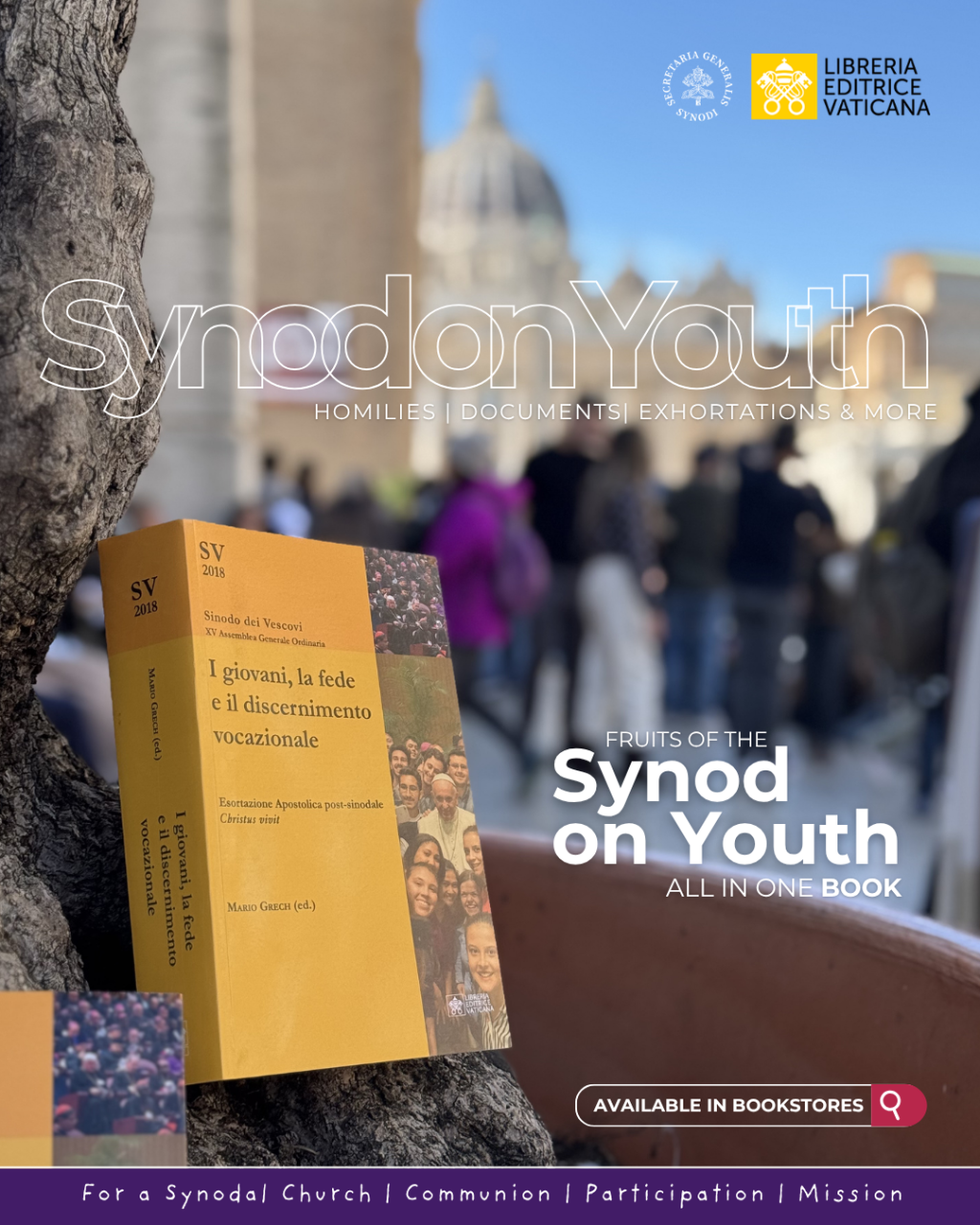 Publisher: Libreria Editrice Vaticana
Year of publication: 2026
Available from: 4 March 2026
Pages: 928 pp., Paperback
Publisher: Libreria Editrice Vaticana
Year of publication: 2026
Available from: 4 March 2026
Pages: 928 pp., Paperback


NEWS TRACKER: RELATED NEWS ON THIS CLASSIFICATION


